A research-into-practice laboratory at the University of Connecticut
At PEDAL, we study how people perceive one another and learn together. Do instructors and students see one another as genuine? Does what one person feels match what another sees? How do learners process complex information, especially when attention or emotion is under strain? Design shapes how we answer those questions: from the multimedia stimuli we build for experiments, to the pedagogy we craft in our classrooms, to the interventions we develop to move what we learn into practice.
To move forward, you have to push.
Our work spans a variety of spaces where learning takes place. A few that are currently front and center:
We ask instructors and their students about their own behaviors, attitudes, and emotions – then we ask them about each other’s. When do they match or mismatch? What matters most?
Are people’s media habits changing what and how they learn? Can teachers leverage short form video and other media tools to fight fire with fire?
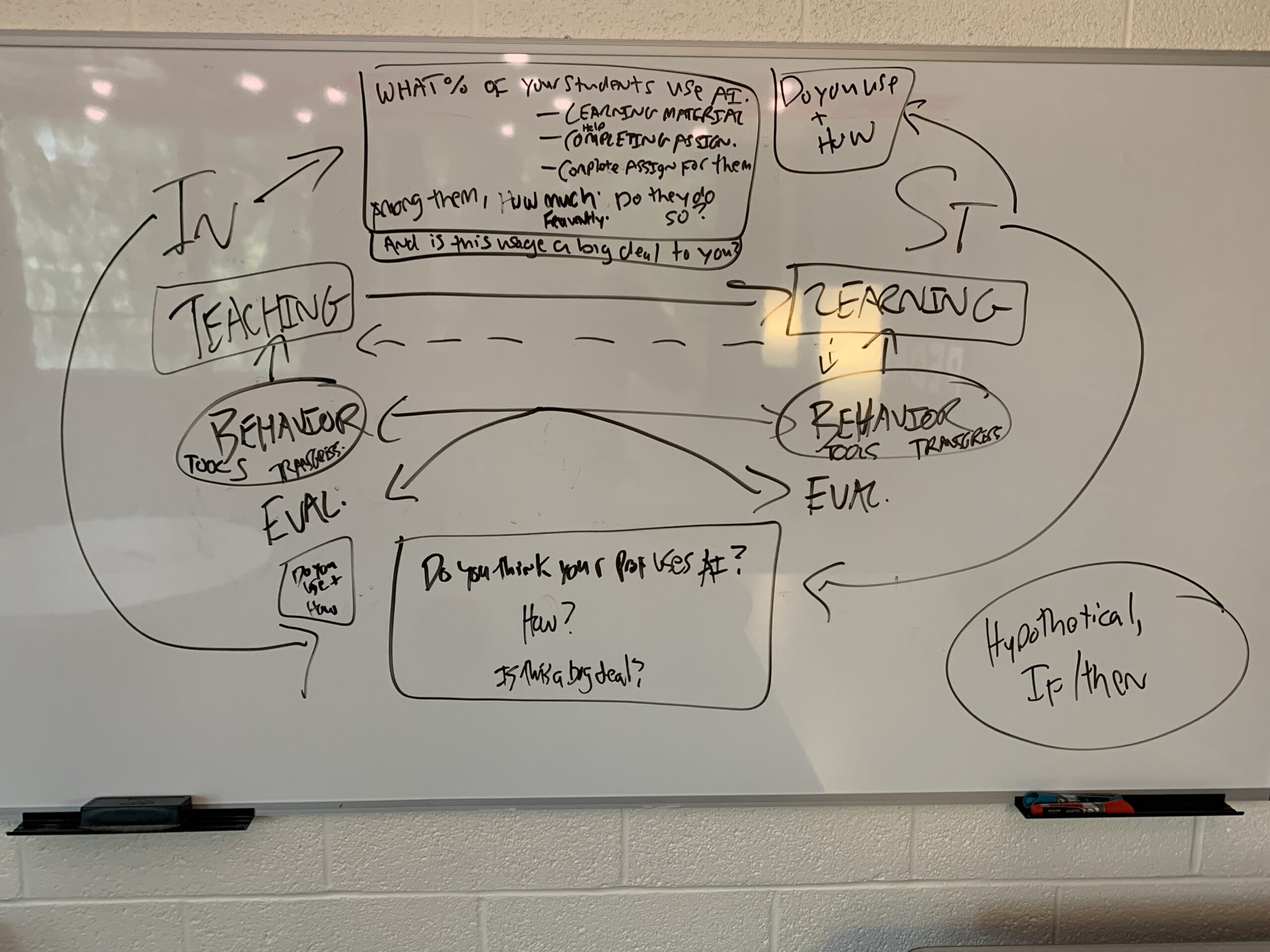
Instructors and students have expectations about each other’s AI use in education. Are they accurate? And are all motivations for using AI created equal? Do messages ‘made with AI’ suffer for it?
Can understanding how we feel help us manage complex challenges, from dealing with stigma to managing family trauma? How can we build emotional competence for those who need it most?
How well does students’ confidence in their communication skills align with their actual skills — and which pedagogical practices can close the gap?
What makes students willing to have difficult conversations? How can instructors encourage empathetic listening and tolerance for disagreement even as discussions get divisive?
For prospective collaborators
We built PEDAL to bridge the unnecessary gap between teaching and research. We want to get better as scholars and teachers, build creative things that bring the two together, and collaborate with people who feel similarly. If you keep thinking about the patterns you notice in classrooms, the things that make students tick, or the techniques that carry into real-world learning, you’d probably enjoy collaborating with us. Every person we collaborate with adds their own ideas and flavor to the work; we have ongoing projects you can join, and the headspace to support your new directions, too. PEDAL is an open lab by design: our collaborators often work across faculty and research teams, so that students get broader mentorship and exposure to ideas beyond our own projects. We’re building new stuff every year, and excited to add fresh perspectives.
Research into practice
We see research, teaching, and learning as parts of the same cycle, all shaping one another. PEDAL’s findings feed the curricula and pedagogy of our courses, and our teaching helps us find our next areas of research. See the practice work.
What the letters mean
The classroom is our field site. We study teaching so we can identify what makes it work, and use our findings to help us do it well.
We study how emotions are displayed, perceived, and even performed, building upon research that began decades ago at UConn.
Our teaching and curricula, research studies and stimuli, applied projects and interventions are all built with care. Good design makes everything better.
Every project we tackle is engineered with one thing in mind: helping people learn in ways that enable them to thrive.